Peptide Injections: What They Are, Routes, Cost and Results
Peptide injections explained: approved drugs vs research compounds, subcutaneous vs IM routes, how doses are measured, cost factors, and realistic results.
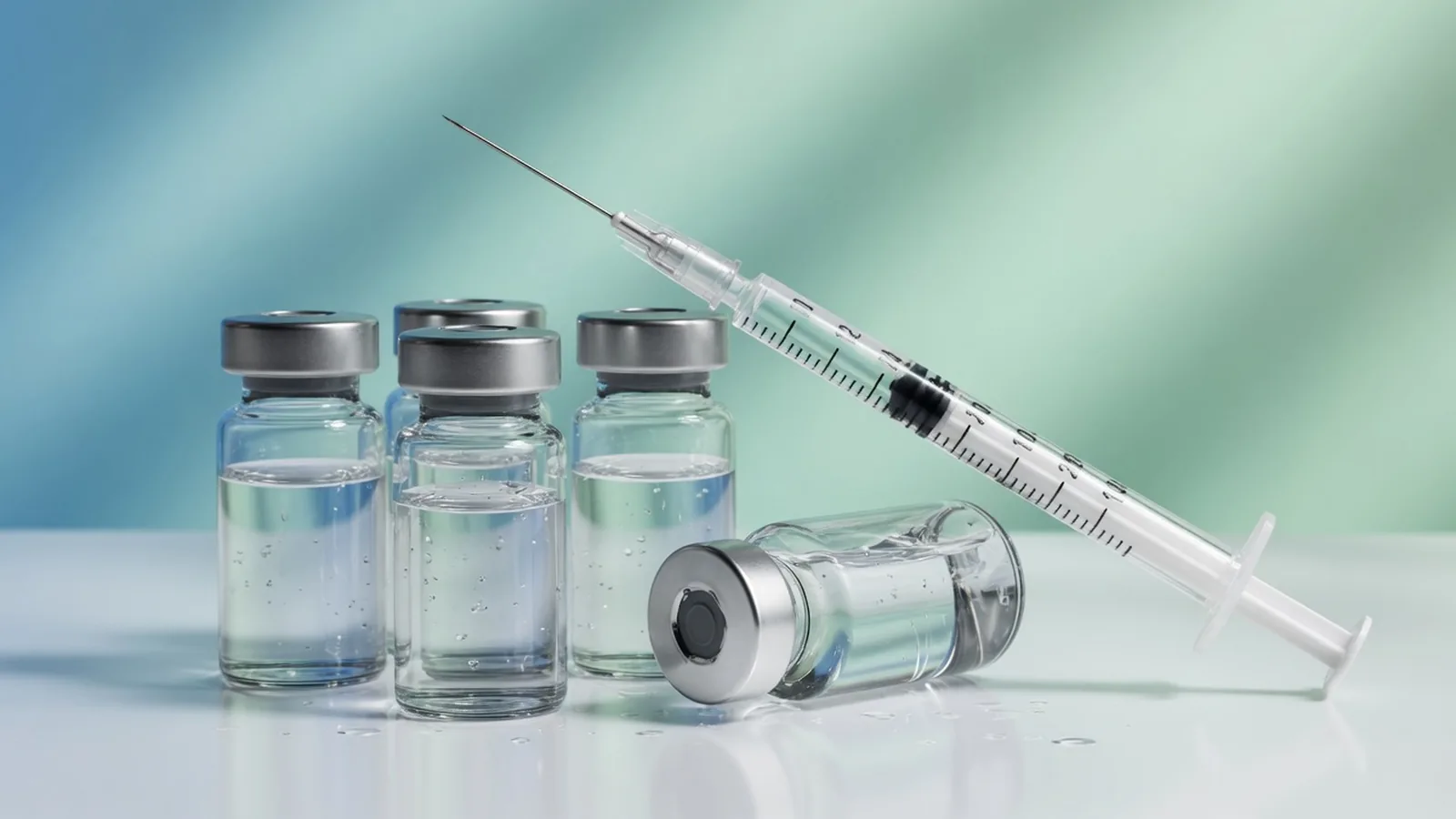
MEDICAL DISCLAIMER: Educational research guidelines only. Lyophilized peptides are investigational chemical compounds and are NOT approved for human consumption, diagnosis, or therapy. Consult a licensed physician before any research application.
A peptide injection is a shot of a short amino-acid chain, usually given just under the skin, because most peptides are broken down in the gut before they can be absorbed. The term covers two very different things: FDA-approved prescription drugs with a label that fixes the dose, site and schedule (semaglutide, tirzepatide, tesamorelin, bremelanotide), and unapproved research compounds sold as powder in vials with no label at all (BPC-157, TB-500, CJC-1295 and most of what clinics and websites call "peptide therapy"). Which of the two you are dealing with decides almost everything else on this page: how the dose is measured, what results the evidence supports, what it costs and where it can legally come from.
This guide is the hub for injectable peptides on this site. It covers the routes, what a shot physically involves, how milligrams become syringe units, what before-and-after claims can and cannot show, the factors that drive cost, and where people actually get peptide shots. It is reference information, not medical advice. Injectable weight-loss drugs have their own guide at weight loss injections.
What injectable peptides are: approved drugs vs research compounds
Chemically, insulin, semaglutide and BPC-157 all count as peptides. Regulatorily they sit in different worlds, and the label (or its absence) is the dividing line.
| Category | Examples | Who sets the dose | Quality oversight |
|---|---|---|---|
| FDA-approved peptide drugs | Ozempic (semaglutide), Mounjaro (tirzepatide), Egrifta SV (tesamorelin), Vyleesi (bremelanotide), Miacalcin (calcitonin salmon) | The prescribing information: fixed doses, steps, maximums and injection sites | FDA approval of the product and its manufacturing |
| Compounded peptides | Pharmacy-made versions prepared on a prescription | The prescriber, often borrowing from a label when one exists | FDA states compounded drugs are not FDA-approved and are not verified for safety, effectiveness or quality before marketing |
| Research-market peptides | BPC-157, TB-500, CJC-1295, ipamorelin, AOD-9604, GHK-Cu | Nobody: there is no label and, for most, no human dosing trial | Seller's own testing, if any; sold "not for human use" |
A few compounds sit awkwardly between categories. Sermorelin was an FDA-approved drug (Geref, EMD Serono, approved 1997) that is now discontinued; FDA's record notes it was not withdrawn for safety or effectiveness reasons. PT-141 is the research name for bremelanotide, which is approved as Vyleesi for one specific indication. Each compound's dosage page on this site says which category it is in, for example semaglutide, tesamorelin, sermorelin and BPC-157.
Routes: subcutaneous vs intramuscular peptide shots
Nearly every peptide shot people ask about is subcutaneous (SC): injected into the fat layer between skin and muscle. The approved labels are consistent on this. Ozempic is injected subcutaneously in the abdomen, thigh or upper arm, and its Medication Guide says not to inject it into a muscle or vein. Egrifta SV is injected subcutaneously into the abdomen. Vyleesi is given subcutaneously into the abdomen or thigh by autoinjector.
Intramuscular (IM) injection is the exception. Miacalcin (calcitonin salmon) is one of the few peptide labels that allows either route, and it states that if the volume exceeds 2 mL, intramuscular injection is preferable and the dose should be split across several sites. The diabetes injection-technique consensus known as FITTER goes the other way for insulin: it recommends the shortest needles and says intramuscular injection should be avoided, especially with long-acting insulins, because severe hypoglycemia may result.
| Route | Where it goes | Typical needle | Peptide examples (per label) |
|---|---|---|---|
| Subcutaneous | Fat layer under the skin: abdomen, thigh, back of upper arm | Short, fine pen or insulin-syringe needle | Ozempic, Mounjaro, Egrifta SV, Vyleesi |
| Intramuscular | Muscle (for example the deltoid or thigh) | Longer needle | Miacalcin (SC or IM) |
| Intravenous | Vein, by a clinician | IV cannula | Not a self-injection route for any product on this page |
Where exactly to place a subcutaneous shot, how to rotate, and what needle length and angle the labels describe are covered in detail in peptide injection sites.
What a peptide shot actually involves
The physical process depends on the presentation, and there are three common ones.
Pre-filled pen
Brand GLP-1 drugs mostly come as multi-dose pens. The Ozempic pen ships with NovoFine Plus 32G 4 mm needles; you attach a new needle each time, dial the dose, inject, and remove the needle afterwards. The label is explicit that a pen must never be shared between patients, even if the needle is changed.
Single-dose autoinjector or pre-filled syringe
Vyleesi is a single-dose autoinjector: press it against the abdomen or front of the thigh and it delivers a fixed dose. Ozempic is now also available as single-dose pre-filled syringes, which the instructions say to insert into a pinched fold of skin at a 45-degree angle.
Vial and syringe (reconstitution)
Freeze-dried peptides arrive as powder that must be dissolved first. Egrifta SV is the approved example: each 2 mg vial is mixed with the supplied Sterile Water for Injection using a 1 mL syringe and a mixing needle, then injected with a separate ½-inch 30-gauge needle. Research-market vials follow the same pattern but with no instructions you can rely on; the steps are in the reconstitution guide.
Whatever the device, the instructions across these labels repeat the same basics: a new needle every time, clean and dry skin, rotate the site, never through clothing, and used needles into a sharps container.
How peptide injection doses are measured
A pen hides the arithmetic: you dial a milligram dose and the pen meters it. A vial does not. You have to turn a dose in milligrams (or micrograms) into a volume, and on a U-100 insulin syringe that volume is read in units, where 1 unit = 0.01 mL.
The formula: units = dose (mg) ÷ (vial mg ÷ mL of water added) × 100.
| EXAMPLE vial: 5 mg + 2 mL water = 2.5 mg/mL | Volume | U-100 syringe units |
|---|---|---|
| 0.10 mg (100 mcg) | 0.04 mL | 4 units |
| 0.25 mg (250 mcg) | 0.10 mL | 10 units |
| 0.50 mg | 0.20 mL | 20 units |
| 1.00 mg | 0.40 mL | 40 units |
The concentration above is an illustration only, not a recommended preparation. Change the water volume and every row changes, which is why the same dose can be 10 units for one person and 25 for another. Run your own numbers in the mg to mL to units converter, and see the syringe measurement guide for reading the barrel. Compounded or research vials are not equivalent to branded pens even at the same milligram figure: the label's dose was established with the approved product, and a vial's labelled mass is the seller's claim.
Peptide injections before and after: what the evidence supports
Before-and-after photos are the most common way peptide shots are sold, and the least informative. A photo has no control group, no standardised lighting or posture, and no way to separate the injection from diet, training, time or a different drug. Controlled trials are the only results that mean anything, and they only exist for the approved products. Their labels report them plainly, and the effects are real but bounded.
| Product | What the trials measured | Reported result (per label) |
|---|---|---|
| Egrifta (tesamorelin), HIV-associated abdominal fat | Visceral fat by CT scan after 26 weeks | Mean change of -18% vs +2% on placebo in Study 1, and -14% vs -2% in Study 2 |
| Vyleesi (bremelanotide), premenopausal HSDD | Desire score and number of satisfying sexual events | Desire score improved significantly vs placebo; no significant difference in satisfying sexual events |
| Research peptides (BPC-157, TB-500, CJC-1295 and others) | No controlled human outcome trials | No evidence-based before-and-after exists |
Two points follow. First, even approved peptides produce averages with wide individual variation, and the Egrifta label tells prescribers to weigh continuing treatment in patients who have not had a reduction. Second, for research compounds, testimonials and photos are not a weaker version of evidence; they are a different thing altogether. For the GLP-1 drugs, where trial data are extensive, see the brand pages: Ozempic dosage chart and Mounjaro dosage chart.
Peptide injections cost: what drives the price
Prices vary too widely by product, pharmacy, insurer and country to quote responsibly, and they change often. What can be stated is which factors move the number and in which direction.
| Factor | Why it matters |
|---|---|
| Approved brand vs compounded vs research vial | Brand drugs carry the cost of approval and manufacturing standards; compounded and research products are cheaper because they skip those |
| Insurance and indication | Coverage usually follows the approved indication; the same drug can be covered for one diagnosis and not another |
| Dose step | Escalating schedules mean the monthly amount, and sometimes the price tier, changes as the dose rises |
| Frequency | Once-weekly, once-daily and as-needed products accumulate very differently over a month |
| Clinic fees | Consultations, lab work and membership models can cost more than the drug itself |
| Supplies | Needles, syringes, alcohol pads, diluent and a sharps container; pens include some of these, vials do not |
A low price is not neutral information. With a research vial, the cheapest option is often the one with the least testing behind the labelled milligram figure.
Peptide injections near me: clinics, prescribers and the research market
Searches for peptide injections near me usually lead to three kinds of source, with very different legal footing.
- A prescriber and a licensed pharmacy. For approved peptides this is the only route that gets you the product the label describes. Telehealth services are prescribers too; the drug still comes from a pharmacy.
- Compounding pharmacies. Pharmacies working under section 503A compound on a prescription for a named patient; 503B outsourcing facilities register with FDA and meet higher quality standards. FDA is clear that compounded drugs are not FDA-approved.
- Peptide or wellness clinics selling research compounds. FDA keeps a public list of bulk substances that may present significant safety risks in compounding. As of April 2026 it includes ipamorelin, GHRP-2, GHRP-6, kisspeptin-10 and ibutamoren (MK-677), citing risks such as immunogenicity and, for ibutamoren, a congestive heart failure signal. BPC-157, CJC-1295, AOD-9604, TB-500 and injectable GHK-Cu were nominated, flagged for similar concerns, then withdrawn by the nominators.
Questions worth asking any clinic: Is this an FDA-approved product or compounded? Which pharmacy makes it, and is it 503A or 503B? What dose, and where does that number come from? What happens if I get a reaction? A clinic that cannot answer the second and third questions is telling you something.
Injectable peptides by goal: where to go next
This page is the overview. The detail lives on dedicated pages:
- Weight management: the GLP-1 and dual-agonist drugs have their own guide, weight loss injections, which links on to each brand's dosing page.
- Skin: copper peptide (GHK-Cu) and "collagen" injections, and why most of the skin evidence is topical: peptide injections for skin.
- Growth-hormone axis: tesamorelin (approved), sermorelin (formerly approved), and research secretagogues such as CJC-1295 and ipamorelin.
- Sexual function: PT-141 (bremelanotide).
- Repair claims: BPC-157 and TB-500, both without approved human use.
Safety basics that every label repeats
The approved labels agree on a short list of practical rules, and they apply equally to anything injected from a vial:
- Never share a pen, syringe or needle, even with a new needle: the Ozempic label warns of blood-borne pathogen transmission, and the Egrifta SV label of infection.
- New needle, every injection, and dispose of it in a sharps container.
- Rotate sites to reduce injection-site reactions and skin changes.
- Expect some site reactions. They are common even with approved products: injection-site reactions were reported in 25% of Egrifta patients vs 14% on placebo, and 13.2% on Vyleesi vs 8.4% on placebo.
- Stay within the label. For prescription peptides, dose changes belong to the prescriber, and no dose above a label maximum is supported by the evidence behind it.
Frequently Asked Questions
What is a peptide injection?expand_more
A shot of a short amino-acid chain, usually given subcutaneously because peptides are largely broken down in the gut. It can be an FDA-approved drug such as semaglutide or tesamorelin, or an unapproved research compound such as BPC-157.
Are peptide shots given in the muscle or under the skin?expand_more
Almost always under the skin. The Ozempic, Mounjaro, Egrifta SV and Vyleesi labels all specify subcutaneous injection. Miacalcin is an exception that allows subcutaneous or intramuscular use.
Are injectable peptides legal?expand_more
Approved peptide drugs are legal with a prescription. Compounded versions are legal when made by a pharmacy on a valid prescription but are not FDA-approved. Research-market peptides are sold as not for human use, and FDA has flagged several, including ipamorelin and MK-677, as presenting significant safety risks in compounding.
How much do peptide injections cost?expand_more
It depends on whether the product is branded, compounded or a research vial, on insurance and the approved indication, on the dose step and frequency, and on clinic and supply fees. Prices change too often to state reliably.
Do peptide injections before and after photos prove they work?expand_more
No. Photos have no control group and cannot separate the injection from other changes. Controlled trials exist only for approved products, and their labels report average effects with wide individual variation.
How do I convert a peptide dose in mg to syringe units?expand_more
Units = dose in mg divided by the vial concentration in mg/mL, times 100, on a U-100 syringe. For example, at an example concentration of 2.5 mg/mL, 0.25 mg is 0.1 mL, or 10 units. The mg to mL converter does this for any vial.
References & Citations
- [1]
Ozempic (semaglutide) injection, for subcutaneous use. US Prescribing Information, Medication Guide and Instructions for Use. Novo Nordisk; revised 01/2025, DailyMed version effective June 2026.View source →
- [2]
Egrifta SV (tesamorelin) for injection, for subcutaneous use. US Prescribing Information and Instructions for Use. Theratechnologies; revised 03/2024, DailyMed version July 2026.View source →
- [3]
Vyleesi (bremelanotide injection), for subcutaneous use. US Prescribing Information. Cosette Pharmaceuticals; revised 03/2024.View source →
- [4]
Miacalcin (calcitonin salmon) injection, for subcutaneous or intramuscular use. US Prescribing Information. Mylan Institutional; DailyMed version 09/2024.View source →
- [5]
Frid AH, Kreugel G, Grassi G, et al. New Insulin Delivery Recommendations (FITTER). Mayo Clin Proc. 2016;91(9):1231-1255.View source →
- [6]
US FDA. Compounding and the FDA: Questions and Answers. Content current as of 09/16/2025.View source →
- [7]
US FDA. Certain Bulk Drug Substances for Use in Compounding that May Present Significant Safety Risks (Category 2 and nominated-but-withdrawn lists). Content current as of 04/22/2026.View source →
- [8]
Drugs@FDA. Geref (sermorelin acetate), NDA 020443, EMD Serono; approved 09/26/1997, marketing status Discontinued, with Federal Register determination that it was not discontinued for safety or effectiveness reasons.View source →