Mounjaro Maximum Dose: The 15 mg Ceiling and How It Is Reached
The Mounjaro maximum dose is 15 mg once weekly for adults and 10 mg for children 10+, per the August 2026 label. Escalation steps, Zepbound, and vial units.
MEDICAL DISCLAIMER: Educational research guidelines only. Lyophilized peptides are investigational chemical compounds and are NOT approved for human consumption, diagnosis, or therapy. Consult a licensed physician before any research application.
The Mounjaro maximum dose is 15 mg injected under the skin once a week for adults. For children aged 10 and older with type 2 diabetes the ceiling is lower, at 10 mg once weekly. Both figures come from the current US prescribing information for Mounjaro (tirzepatide), revised August 2026.
Nobody starts at the maximum. The label begins everyone at 2.5 mg and allows increases of 2.5 mg only after at least 4 weeks on the current dose, so the earliest a 15 mg dose can be given is week 21. For the full week-by-week ladder, pen strengths and missed-dose rules, see the Mounjaro dosage chart.
Mounjaro max dosage per the current label
Section 2.1 of the Mounjaro label sets two ceilings, one per age group. There is no separate maximum for the second labelled use (reducing the risk of major cardiovascular events in adults with type 2 diabetes at high cardiovascular risk, added in August 2026); the same dosing scheme covers both indications.
| Patient group | Starting dose | Step size | Maximum dose |
|---|---|---|---|
| Adults with type 2 diabetes | 2.5 mg once weekly | 2.5 mg, after at least 4 weeks | 15 mg once weekly |
| Children 10 years and older with type 2 diabetes | 2.5 mg once weekly | 2.5 mg, after at least 4 weeks | 10 mg once weekly |
The pediatric indication was added in December 2025 and the Recommended Dosage section was revised in August 2026, so older copies of the label show only the adult figure.
No dose above 15 mg is approved. For overdose, the label advises contacting Poison Help (1-800-222-1222) and notes tirzepatide's half-life of about 5 days.
The escalation steps needed to reach the maximum dose of Mounjaro
The label's wording is conditional: increase by 2.5 mg "if additional glycemic control is needed", after at least 4 weeks on the current dose. Reaching 15 mg is not a scheduled destination; the prescriber decides whether each step happens at all.
| Step | Weekly dose | Earliest weeks on this dose |
|---|---|---|
| 1 (start) | 2.5 mg | Weeks 1 to 4 |
| 2 | 5 mg | Weeks 5 to 8 |
| 3 | 7.5 mg | Weeks 9 to 12 |
| 4 | 10 mg (pediatric maximum) | Weeks 13 to 16 |
| 5 | 12.5 mg | Weeks 17 to 20 |
| 6 | 15 mg (adult maximum) | Week 21 onward |
Any pause or held dose pushes the dates later. The label ties the slow climb directly to gastrointestinal side effects: the escalation schedule exists "to reduce the risk of gastrointestinal adverse reactions". The tirzepatide side effects guide shows how nausea, vomiting and diarrhea rates rise from the 5 mg to the 15 mg arms of the trials.
Mounjaro vs Zepbound: same molecule, same ceiling, different labels
Mounjaro and Zepbound are both tirzepatide from Eli Lilly, sold in the same six strengths. The maximum is 15 mg once weekly on both. What differs is the indication and how the label treats the lower doses.
| Label point | Mounjaro | Zepbound |
|---|---|---|
| Indications | Type 2 diabetes (adults and children 10+); cardiovascular risk reduction in adults with type 2 diabetes | Weight reduction and long-term maintenance in adults; moderate to severe obstructive sleep apnea in adults with obesity |
| Maximum dose | 15 mg weekly (adults); 10 mg weekly (children) | 15 mg weekly, all indications |
| Escalation trigger | Only if more glycemic control is needed | Step to 5 mg after 4 weeks; further steps toward a chosen maintenance dose |
| Named maintenance doses | None named | 5, 10 or 15 mg (weight); 10 or 15 mg (sleep apnea) |
| Pediatric use | Yes, 10 years and older | No |
The Zepbound label states that it should not be combined with other tirzepatide-containing products or any GLP-1 receptor agonist, so the two brands are alternatives, not additive. See Zepbound dosing for its ladder, GLP-1 medications for the side-by-side view, and Ozempic max dose for semaglutide's ceiling.
What 15 mg looks like in each Mounjaro presentation
The dose is the same in each presentation; the volume and device are not.
| Presentation | 15 mg strength as labelled | Volume per 15 mg dose | Doses per unit |
|---|---|---|---|
| Single-dose pen | 15 mg/0.5 mL | 0.5 mL (whole pen) | 1 |
| Single-dose vial | 15 mg/0.5 mL | 0.5 mL | 1 |
| Multi-dose vial | 60 mg/2.4 mL (25 mg/mL) | 0.6 mL | 4 |
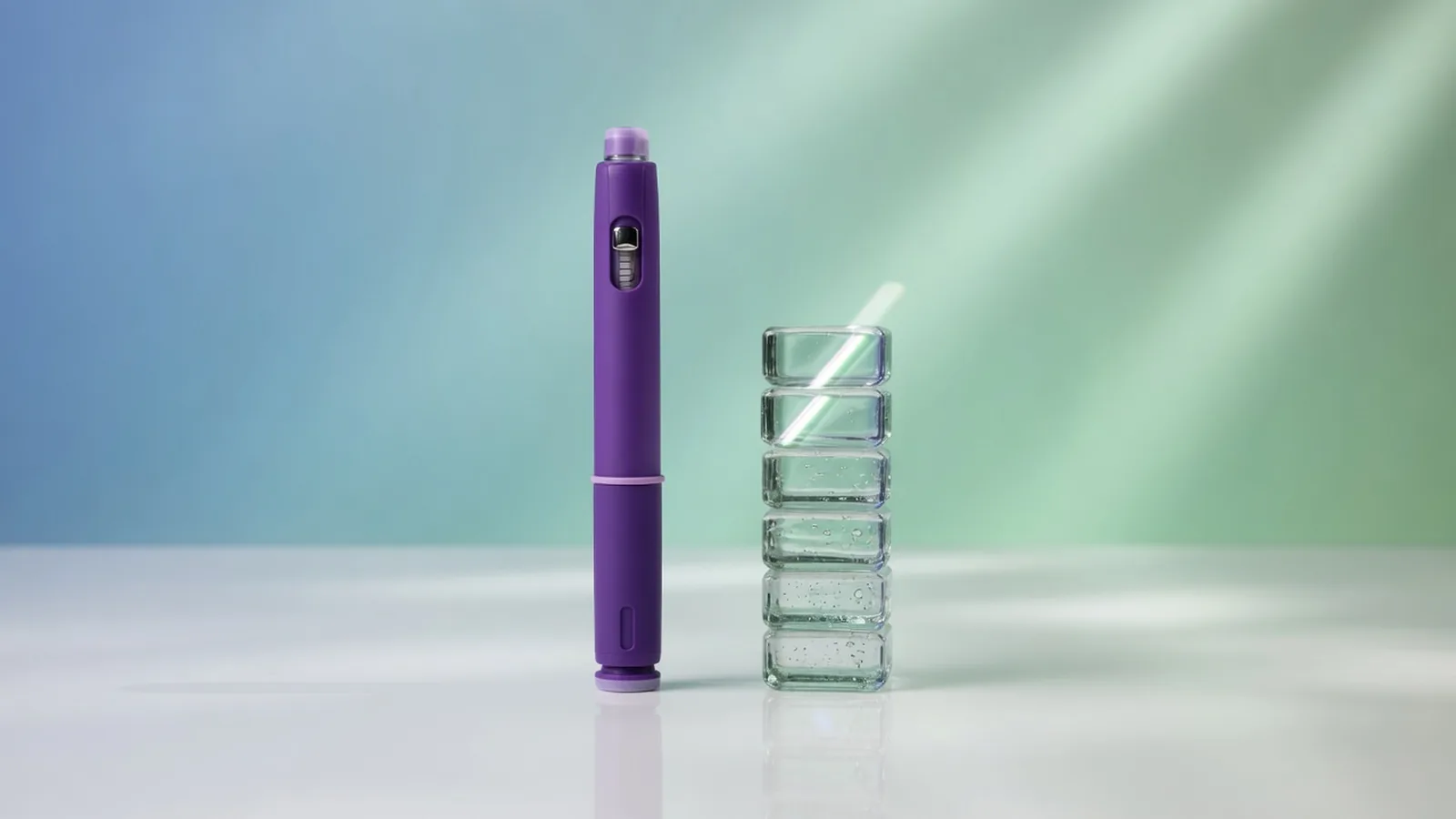
| Single-patient-use KwikPen | 60 mg/2.4 mL (25 mg/mL) | Fixed dose, dialled to the stop | 4 |
For vials, the label asks for a syringe suitable for the dose, for example a 1 mL syringe that can measure 0.5 mL or 0.6 mL, and a new syringe and needle every time; the dose is expressed in millilitres, not syringe units. The KwikPen delivers a fixed dose: after priming, the dose knob is turned until it stops. It is not designed to dial partial or extra doses.
Units at the maximum dose for compounded tirzepatide vials
Compounded tirzepatide is not Mounjaro: the FDA states compounded drugs are not FDA approved, and it has received more than 730 adverse event reports for compounded tirzepatide as of May 31, 2026, some linked to doses beyond the label. Concentrations vary between vials, so a "units" figure cannot be copied from one vial to another.
The arithmetic on a U-100 insulin syringe (100 units = 1 mL) is:
units = dose in mg ÷ (vial mg ÷ mL of liquid) × 100
The table below applies it to a 15 mg dose at three example concentrations. These are illustrations of the formula, not standard products or recommendations.
| EXAMPLE vial | Concentration | Volume for 15 mg | U-100 units for 15 mg |
|---|---|---|---|
| 30 mg in 3 mL | 10 mg/mL | 1.5 mL | 150 units (more than one 1 mL syringe) |
| 40 mg in 2 mL | 20 mg/mL | 0.75 mL | 75 units |
| 60 mg in 2 mL | 30 mg/mL | 0.5 mL | 50 units |
At a dilute concentration the maximum dose does not fit in a 100-unit syringe, and the same "50 units" is 15 mg in one example vial and 5 mg in another. Run your own vial through the tirzepatide calculator or the mg to mL converter, and read the syringe measurement guide before drawing anything.
When the ceiling is not the goal
The maximum dose is a limit, not a target. The label escalates only when more glycemic control is needed, and its adult trials (SURPASS-1 to SURPASS-5) studied 5 mg, 10 mg and 15 mg as separate fixed doses, with GI side-effect rates generally higher at higher doses. Whether to step up, hold or stop is a prescriber's decision.
Two label points apply at every step, including the last: oral contraceptive users are advised to switch method or add a barrier method for 4 weeks after each increase, and insulin or sulfonylurea doses may need lowering to avoid hypoglycemia. The tirzepatide dosage reference collects the label schedules in one place, and the cheapest tirzepatide guide covers access and cost questions.
Frequently Asked Questions
What is the maximum dose of Mounjaro?expand_more
15 mg injected subcutaneously once weekly for adults. For children 10 years and older with type 2 diabetes the maximum is 10 mg once weekly. Both figures are from the US prescribing information revised August 2026.
How long does it take to reach the Mounjaro max dose?expand_more
At least 20 weeks. The label starts at 2.5 mg and allows 2.5 mg increases only after at least 4 weeks on each dose, so the first 15 mg dose can be given in week 21 at the earliest, and only if more glycemic control is needed.
Is the Zepbound maximum dose different?expand_more
No. Zepbound is the same molecule and its maximum is also 15 mg once weekly for all of its indications. The labels differ in indication, named maintenance doses and pediatric use, not in the ceiling.
Can Mounjaro be taken more than once a week to get a higher dose?expand_more
The label is once weekly only. If the injection day changes, doses must be at least 3 days (72 hours) apart. The FDA has received adverse event reports linked to more frequent dosing and faster titration of compounded tirzepatide than the approved label allows.
How many units is 15 mg of tirzepatide?expand_more
It depends entirely on the concentration. On a U-100 syringe, units = mg ÷ (mg per mL) × 100. At an example concentration of 30 mg/mL, 15 mg is 50 units; at 10 mg/mL it is 150 units. Branded Mounjaro vials are dosed in mL: 0.5 mL for a single-dose vial, 0.6 mL from the multi-dose vial.
References & Citations
- [1]
MOUNJARO (tirzepatide) injection, for subcutaneous use. US Prescribing Information, Eli Lilly and Company, revised August 2026 (DailyMed SPL version 40, published September 2, 2026). Sections 1, 2.1, 2.2, 3, 10 and 16.View source →
- [2]
ZEPBOUND (tirzepatide) injection, for subcutaneous use. US Prescribing Information, Eli Lilly and Company, revised August 2026 (DailyMed SPL version 40, published September 2, 2026). Sections 1, 2.1 and 2.2.View source →
- [3]
US Food and Drug Administration. FDA's Concerns with Unapproved GLP-1 Drugs Used for Weight Loss. Content current as of October 1, 2026.View source →
- [4]
US Food and Drug Administration. FDA alerts health care providers, compounders and patients of dosing errors associated with compounded injectable semaglutide products. July 26, 2024.View source →