Zepbound Dosing: Dose Chart, Starting Dose, Max Dose and Vials
Zepbound dosing per the August 2026 label: 2.5 mg for 4 weeks, then 5, 10 or 15 mg maintenance, 15 mg max. Dose chart, pens vs vials, sleep apnea, missed doses.
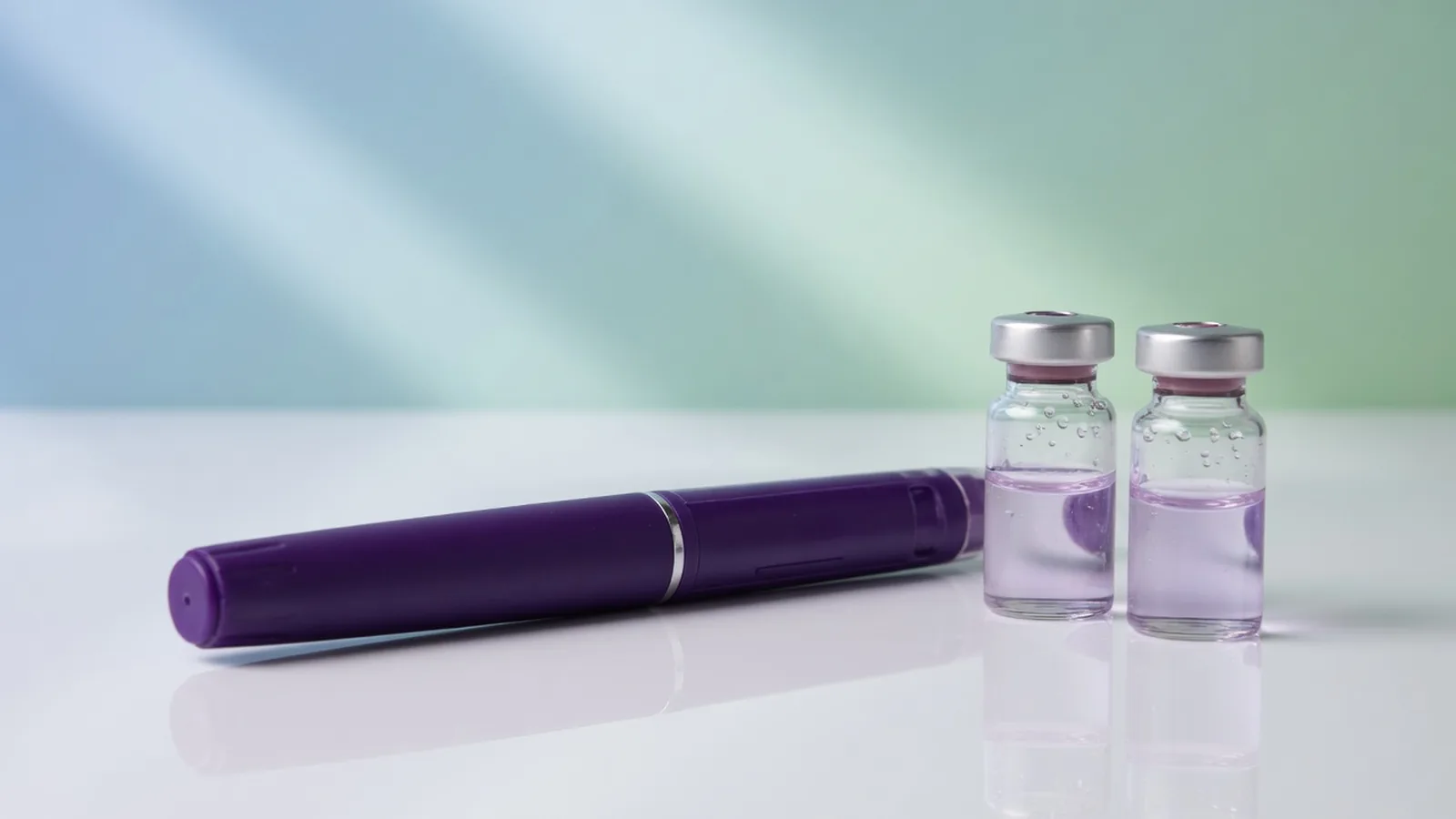
MEDICAL DISCLAIMER: Educational research guidelines only. Lyophilized peptides are investigational chemical compounds and are NOT approved for human consumption, diagnosis, or therapy. Consult a licensed physician before any research application.
Zepbound dosing starts at 2.5 mg injected under the skin once a week for 4 weeks, then moves to 5 mg. From there the dose can rise in 2.5 mg steps, each after at least 4 weeks, until the chosen maintenance dose is reached: 5 mg, 10 mg or 15 mg for weight reduction, or 10 mg or 15 mg for obstructive sleep apnea. The maximum is 15 mg once weekly for every indication.
Those figures are from the current US prescribing information for Zepbound (tirzepatide), revised August 2026. Below are the dose chart, why the 2.5 mg starting dose is not a treatment dose, how maintenance is chosen, the four presentations (single-dose pens, single-dose vials, multi-dose vials and the KwikPen), the missed-dose rule, and the sleep apnea indication. Which dose a person takes, and when they step up, is decided with their prescriber.
Zepbound dose chart
The chart shows the fastest pace the label allows. Each later step is optional: the label says the dose "may be increased" and asks prescribers to weigh response and tolerability, so a person may stay at 5 mg or 10 mg.
| Weekly dose | Earliest weeks | Role on the label |
|---|---|---|
| 2.5 mg | Weeks 1 to 4 | Starting dose only; not approved for maintenance |
| 5 mg | From week 5 | Required next step; a maintenance option for weight reduction |
| 7.5 mg | From week 9 | Escalation step |
| 10 mg | From week 13 | Maintenance option for weight reduction and for sleep apnea |
| 12.5 mg | From week 17 | Escalation step |
| 15 mg | From week 21 | Maintenance option for both indications; maximum dose |
All doses are once weekly, at any time of day, with or without meals, alongside a reduced-calorie diet and increased physical activity as the label specifies. To see this ladder next to semaglutide's, use the GLP-1 medications comparison or the Wegovy dosing schedule.
Zepbound starting dose: why 2.5 mg is not a treatment dose
The label is explicit that the 2.5 mg dose "is for treatment initiation and is not approved as a maintenance dosage". Its purpose is to let the gut adjust before the first dose that is expected to do the work. The label says the escalation schedule is followed for all indications "to reduce the risk of gastrointestinal adverse reactions", which are the most common side effects. Nausea, diarrhea, vomiting and constipation rates by dose are in the tirzepatide side effects guide.
After 4 weeks the label moves the dose to 5 mg. That differs from Mounjaro, the diabetes brand of the same drug, where every step, including the first, is conditional on needing more blood sugar control (see the Mounjaro dosage chart).
Label points that apply at the start and at each step
- Oral contraceptives: switch to a non-oral method, or add a barrier method, for 4 weeks after starting and for 4 weeks after each dose increase, because delayed stomach emptying can reduce the pill's effect.
- Type 2 diabetes medicines: people on insulin or a sulfonylurea have a higher risk of low blood sugar, and those doses may need adjusting.
- No other tirzepatide or GLP-1 drugs: the label does not recommend combining Zepbound with other tirzepatide products or with any GLP-1 receptor agonist.
- Kidney and liver: no dose adjustment is recommended for renal or hepatic impairment.
Choosing a maintenance dose: 5, 10 or 15 mg
For weight reduction and long-term maintenance, the label names 5 mg, 10 mg and 15 mg as maintenance doses and says to consider treatment response and tolerability when choosing. If a maintenance dose is not tolerated, the label says to consider a lower maintenance dose; it is the only part of the label that addresses stepping down.
The label's own trial data give a sense of the trade-off. In Study 1 (adults with obesity or overweight, no diabetes), patients were randomised to fixed doses, escalated over up to 20 weeks, and treated for 72 weeks:
| Study 1 arm | Mean body weight change at week 72 | Stopped study drug |
|---|---|---|
| Placebo | -3.1% | 26.4% |
| Zepbound 5 mg | -15.0% | 14.3% |
| Zepbound 10 mg | -19.5% | 16.4% |
| Zepbound 15 mg | -20.9% | 15.1% |
In Study 2, in adults with type 2 diabetes, the changes were -12.8% at 10 mg and -14.7% at 15 mg against -3.2% on placebo. These are group averages from trials with a structured diet and activity programme, not a prediction for any individual.
The label also reports what happened when treatment stopped. In Study 4, patients took Zepbound at their maximum tolerated dose (10 or 15 mg) for 36 weeks, then were randomised to continue or switch to placebo. Over the next 52 weeks body weight in the placebo group rose by an average of 14.0% from its week-36 level, while the group that continued lost a further 5.5%. That is the evidence behind "long-term maintenance" in the indication.
Zepbound max dose
The maximum dose of Zepbound is 15 mg injected under the skin once weekly, and the label applies that ceiling to all indications. With every step taken at the earliest point, the first 15 mg dose falls in week 21. There is no approved dose above 15 mg, and no approved schedule of more than one injection a week.
Mounjaro shares the same 15 mg adult ceiling; its label adds a 10 mg maximum for children aged 10 and older, a group Zepbound is not approved for. The Mounjaro maximum dose page compares the two labels at the ceiling and shows what 15 mg means in syringe units.
Zepbound pens vs single-dose vials, multi-dose vials and the KwikPen
The August 2026 label lists four presentations, each in all six strengths. The single-dose vial is sold in a 1-pack or a 4-pack; the single-dose pen in a 4-pack; the multi-dose vial and the KwikPen as single units holding four weekly doses.
| Presentation | Labelled strengths | Volume per dose | How the dose is given |
|---|---|---|---|
| Single-dose pen | 2.5, 5, 7.5, 10, 12.5 or 15 mg per 0.5 mL | 0.5 mL | Pre-filled pen, whole pen used once |
| Single-dose vial | 2.5, 5, 7.5, 10, 12.5 or 15 mg per 0.5 mL | 0.5 mL | Drawn with a new syringe and needle |
| Multi-dose vial | 10, 20, 30, 40, 50 or 60 mg per 2.4 mL (4.17 to 25 mg/mL) | 0.6 mL | Four doses drawn with a new syringe each time |
| Single-patient-use KwikPen | 10, 20, 30, 40, 50 or 60 mg per 2.4 mL | Fixed dose | Primed, then dialled to the stop, four times |
Each multi-dose vial and KwikPen holds one strength, so a dose increase means a new product at the next strength. For vials, the label asks for a syringe suited to the dose, for example a 1 mL syringe able to measure 0.5 mL or 0.6 mL. The KwikPen is not recommended for self-injection by people with visual impairment and must never be shared, even with a new needle.
Storage differs too. Single-dose pens and vials can be kept unrefrigerated (up to 30°C/86°F) for a total of 21 days. An opened multi-dose vial or KwikPen is discarded after 30 days at room temperature, 30 days after first use, or after 4 weekly doses, even if liquid remains. Injection sites are the abdomen or thigh, or the back of the upper arm if another person injects; see peptide injection sites for rotation. Cost and access by presentation are covered in cheapest tirzepatide.
Missed Zepbound dose and changing the injection day
| Situation | What the label says |
|---|---|
| Missed dose, no more than 4 days (96 hours) late | Take it as soon as possible, then resume the usual weekly day |
| Missed dose, more than 4 days late | Skip it and take the next dose on the usual day |
| Moving the weekly injection day | Allowed if the two doses are at least 3 days (72 hours) apart |
The label does not cover restarting after several missed weeks. Because the slow ladder exists to limit GI side effects, whether to resume at the same dose or step back down after a long gap is a question for the prescriber.
Zepbound dosing for obstructive sleep apnea
Zepbound's second indication is moderate to severe obstructive sleep apnea (OSA) in adults with obesity, again alongside a reduced-calorie diet and increased activity. The starting dose and ladder are the same; only the maintenance range is narrower, at 10 mg or 15 mg once weekly.
That range comes from the trials. Studies 5 and 6 enrolled 469 adults with moderate to severe OSA and obesity, one group not using positive airway pressure (PAP) therapy and one using it. Doses were escalated over up to 20 weeks to the maximum tolerated dose of 10 mg or 15 mg, and after 52 weeks Zepbound produced a statistically significant reduction in the apnea-hypopnea index compared with placebo. Patients with type 2 diabetes were excluded from both studies.
Zepbound vs Mounjaro, and compounded tirzepatide
Zepbound and Mounjaro contain the same drug in the same six strengths and presentations, but they are separate labels: Zepbound for weight and sleep apnea, Mounjaro for type 2 diabetes and cardiovascular risk reduction in type 2 diabetes. The Mounjaro dosage chart sets out how that label's ladder differs.
Compounded tirzepatide is neither. The FDA states that compounded drugs are not FDA approved and are not reviewed for safety, effectiveness or quality, and it has received more than 730 adverse event reports for compounded tirzepatide as of May 31, 2026, including reports linked to doses, frequencies or titration faster than the approved label. Compounded vials come in varying concentrations, so syringe units must be worked out for each vial:
units = dose in mg ÷ (vial mg ÷ mL of liquid) × 100 (U-100 syringe)
| Dose | Units at an EXAMPLE 20 mg/mL concentration |
|---|---|
| 2.5 mg | 12.5 units |
| 5 mg | 25 units |
| 10 mg | 50 units |
| 15 mg | 75 units |
The 20 mg/mL concentration is only an illustration; at any other concentration every figure changes. The tirzepatide calculator and the mg to mL converter do the arithmetic from your vial's label, and the syringe measurement guide explains reading the marks. The tirzepatide dosage reference collects the label schedules in one place.
Frequently Asked Questions
What is the Zepbound starting dose?expand_more
2.5 mg injected under the skin once weekly for 4 weeks. The label states this dose is for starting treatment only and is not approved as a maintenance dose; after 4 weeks the dose moves to 5 mg.
What is the Zepbound max dose?expand_more
15 mg once weekly, for all indications. With each 2.5 mg step taken at the earliest point the label allows, the first 15 mg dose falls in week 21.
Do I have to go up to 15 mg on Zepbound?expand_more
No. For weight reduction the label lists 5 mg, 10 mg or 15 mg as maintenance doses and says to consider response and tolerability. For sleep apnea the maintenance dose is 10 mg or 15 mg.
Is Zepbound available in vials?expand_more
Yes. The current label lists single-dose vials (2.5 to 15 mg per 0.5 mL, in 1-packs and 4-packs) and multi-dose vials holding four 0.6 mL doses, alongside single-dose pens and the four-dose KwikPen.
What if I miss a Zepbound dose?expand_more
Take it as soon as possible if no more than 4 days (96 hours) have passed. If more than 4 days have passed, skip it and take the next dose on the regular day. Doses must be at least 3 days apart.
Is Zepbound dosing the same as Mounjaro dosing?expand_more
The strengths, starting dose, step size and 15 mg adult maximum are the same. The difference is that Zepbound requires moving from 2.5 mg to 5 mg after 4 weeks and names maintenance doses, while Mounjaro increases only if more blood sugar control is needed and also covers children 10 and older up to 10 mg.
References & Citations
- [1]
ZEPBOUND (tirzepatide) injection, for subcutaneous use. US Prescribing Information, Eli Lilly and Company, revised August 2026 (DailyMed SPL version 40, published September 2, 2026). Sections 1, 2, 3, 7, 8, 14 and 16.View source →
- [2]
MOUNJARO (tirzepatide) injection, for subcutaneous use. US Prescribing Information, Eli Lilly and Company, revised August 2026 (DailyMed SPL version 40, published September 2, 2026). Sections 1 and 2.1.View source →
- [3]
US Food and Drug Administration. FDA's Concerns with Unapproved GLP-1 Drugs Used for Weight Loss. Content current as of October 1, 2026.View source →
- [4]
US Food and Drug Administration. FDA alerts health care providers, compounders and patients of dosing errors associated with compounded injectable semaglutide products. July 26, 2024.View source →